The nuance of Creatine in Perimenopause & Menopause: What you’re not being told.
THE HONEST SUMMARY
Creatine is having a moment. Across social media, wellness platforms, and even mainstream media, you'll find it being enthusiastically recommended for every woman over 40. The research behind this enthusiasm is real — there are genuine, biologically plausible reasons why creatine may benefit some women navigating the hormonal shifts of perimenopause and menopause. But the gap between 'may benefit some women in specific circumstances' and 'everyone should take it' is significant, and that gap is being quietly filled with hype.
The truth is more interesting than either 'creatine is amazing' or 'creatine is dangerous.' It sits in the nuanced middle: a supplement with real potential benefits, real biochemical trade-offs, and some understated safety considerations that deserve an honest airing before anyone reaches for a tub. This article is that honest airing.
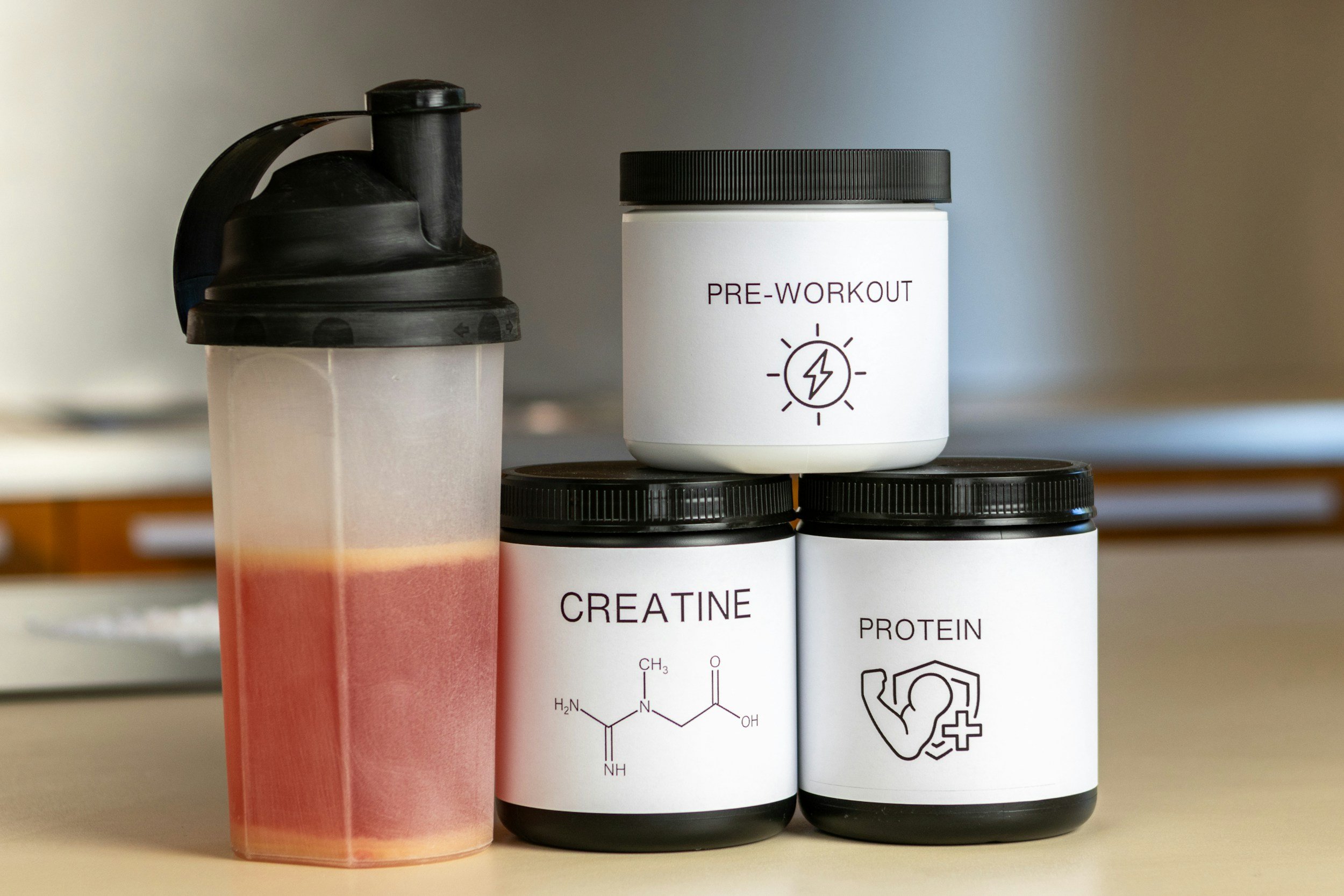
Previously the darling of the gym-bro’s, creatine is being touted as the holy grail for peri/menopause.
It’s never that simple.
First — What Is Creatine, and What Does It Actually Do?
Creatine is a small molecule your body makes naturally, primarily in the kidneys and liver, by combining two amino acids, glycine and arginine. It acts as a rapid energy reserve, most concentrated in muscle and brain tissue, where it helps regenerate ATP (the fuel your cells run on) during short, high-demand bursts of activity. Think of it as your body's emergency power bank: when energy demands spike, creatine is what bridges the gap while the main energy system catches up.
Your body makes roughly half of what it needs from scratch. The other half, in omnivores, comes from food — mainly meat and fish. Vegetarians and vegans get essentially none from their diet, and their body's own production must cover the full requirement.
Supplemental creatine monohydrate has been researched for over 30 years, making it one of the most studied dietary supplements in existence. That research base is genuinely reassuring in many ways; but it has also, until very recently, focused almost entirely on young male athletes. The emerging research on women, and specifically on midlife women, is newer, smaller, and more qualified than the current wellness narrative tends to acknowledge.
The Hormone-Creatine Connection: Where It Gets Interesting
Here is the piece of biology that makes creatine genuinely relevant to women at menopause, and that most articles get right: the enzyme that kicks off the body's creatine production — called AGAT — is directly regulated by oestrogen. When oestrogen is present, it helps modulate AGAT activity and keeps the creatine production system in balance. As oestrogen declines during perimenopause, this regulation is disrupted.
Women also start from a lower baseline: research consistently shows women have 70–80% lower creatine stores than men (Smith-Ryan et al., 2021). So when production becomes less efficient, there is less buffer to draw on. This creates a biologically plausible case for why perimenopausal women might benefit from additional creatine through diet or supplementation.
BUT HERE IS WHAT MOST ARTICLES DON'T TELL YOU:
When you take creatine from an external source — whether food or a supplement — your body detects the rising creatine levels and responds by turning down its own production. This happens through a feedback mechanism that suppresses AGAT activity at the gene expression level.
In other words, supplementing with creatine does partially switch off your internal creatine-making system. This suppression is dose-dependent and reversible and production resumes when you stop - but it is real, and it means that long-term supplementation creates a degree of dependence on the external source to maintain your creatine levels.
The research does suggest this feedback effect may actually be metabolically beneficial in some ways — making creatine internally is a significant consumer of the body's methylation resources (the biochemical process behind DNA repair, mood chemistry, and many other functions), so suppressing that internal production can free up those resources. But this is a nuanced trade-off, not a clean win, and it is not the same as saying the AGAT suppression is trivial or has no consequences. AND, it depends on your particular DNA situation.
The Safety Concern Nobody Mentions: Kidney Function and Formaldehyde
This is the section that rarely makes it into the wellness articles, and it deserves real attention.
When creatine is metabolised in the body, a portion of it is broken down into a compound called methylamine. Methylamine is then converted (by an enzyme called SSAO) into formaldehyde, hydrogen peroxide, and ammonia. Formaldehyde is a reactive compound that can cross-link proteins and DNA, and is classified as a known carcinogen at high environmental exposures. In a healthy body with well-functioning kidneys, these byproducts are promptly excreted in the urine. GREAT! The research confirms this: a human study found that high-dose creatine supplementation (21 g per day) increased urinary formaldehyde excretion 4.5-fold and methylamine excretion 9.2-fold — but found no signs of kidney damage in healthy young men (Poortmans et al., 2005). The compounds were being cleared, not accumulating.
The critical phrase there is 'in healthy young men with well-functioning kidneys.'
THE CLINICAL CONCERN: Standard blood tests for kidney function; the serum creatinine test most of us receive at a routine check-up, do not become abnormal until approximately 50% of kidney filtering capacity has already been lost (StatPearls, 2024; Medscape, 2024). The kidneys compensate silently by working the remaining nephrons harder, maintaining apparently normal test results while underlying function is already significantly compromised. According to the National Kidney Foundation, an estimated 90% of people with chronic kidney disease are unaware they have it (National Kidney Foundation, 2024). This means that a large number of people — including many midlife women, for whom diabetes, hypertension, repeated UTIs, NSAID use, and age-related nephron loss are all common — may have meaningfully reduced kidney clearance capacity while their routine blood tests look completely normal.
For these women, the capacity to efficiently excrete formaldehyde and its related byproducts may be reduced — and the available research simply does not tell us what happens to those metabolites in women with subclinical kidney impairment taking creatine at standard doses over months or years. That study has not been done. The honest position is not that creatine causes kidney damage in people with normal kidneys — the evidence does not support that. The honest position is that we genuinely do not know what happens in the large, largely undetected population of people with reduced kidney function, and that the current blanket recommendations to supplement do not adequately account for this gap.
There are also additional risk factors worth naming explicitly. SSAO activity: the enzyme that converts methylamine into formaldehyde, is measurably elevated in people with type 2 diabetes, cardiovascular disease, and Alzheimer's disease. These are conditions whose prevalence increases in the exact demographic being targeted by creatine marketing for menopause. An elevated SSAO activity means a faster conversion of methylamine into its toxic products. This has led researchers to specifically flag creatine supplementation in people with type 2 diabetes as requiring caution (Solmonides et al., 2020).

The Methylation Connection:Why Your Genetics Matter Here
Making creatine inside the body is one of the single largest consumers of what biochemists call 'methyl groups' — the chemical tags used in a vast range of biological processes including DNA repair, neurotransmitter production, hormone metabolism, and immune regulation. The step that completes creatine synthesis draws on a molecule called SAM (S-adenosylmethionine), and as a byproduct generates a compound called homocysteine. Elevated homocysteine is an established cardiovascular and neurological risk factor.
The theoretical case for creatine supplementation is that by suppressing internal creatine production (via the AGAT feedback mechanism described above), it reduces methylation demand and therefore lowers homocysteine. This sounds appealing — but human trials have not consistently demonstrated this effect. A large, well-designed randomised controlled trial found that creatine supplementation did significantly lower the precursor molecule (GAA), consistent with AGAT suppression — but it did not reliably lower homocysteine levels in most participants (Peters et al., 2015).
The picture changes, however, depending on a common genetic variant called MTHFR. MTHFR is an enzyme involved in recycling homocysteine. Approximately 10% of people carry a version that reduces this enzyme's efficiency by 60–70% — meaning homocysteine tends to accumulate more easily. A case study found that in someone with this variant, creatine supplementation actually produced a dramatic drop in homocysteine — from 33.3 to 17.1 μmol/L. But in people without the variant, homocysteine tended to nudge slightly upward, even if still within normal range (Petr et al., 2013).
Why does this matter? Midlife women are disproportionately represented among those referred for functional health investigations, many of whom carry MTHFR variants. For women who already have elevated homocysteine or known MTHFR variants, creatine supplementation may require careful co-supplementation with methylation cofactors — B12, folate, and B6 — to avoid worsening the methylation picture. And for anyone with elevated homocysteine, this is not a trivial concern: homocysteine is independently associated with increased risk of dementia, cardiovascular disease, and bone loss — exactly the conditions a woman in menopause is trying to protect against.
Where the Evidence Is Genuinely Promising…For the Right Women
Having laid out the concerns clearly, it is equally important to be honest about what the evidence does support — because for some women, in the right clinical context, creatine supplementation may be meaningfully helpful.
Brain fog, cognition, and mood
A 2025 randomised controlled trial specifically in perimenopausal and menopausal women (the CONCRET-MENOPA study) found that 1,500 mg per day of creatine hydrochloride over 8 weeks increased frontal brain creatine levels by 16.4% (versus 0.9% in placebo), improved reaction time, improved lipid profiles, and showed a trend toward reduced mood swings (Korovljev et al., 2026). This is a small trial (36 women) and should be interpreted accordingly — but the biological mechanism is compelling, and a 2024 meta-analysis of 16 trials found broader support for creatine improving memory, attention, and information processing speed in adults (Xu et al., 2024). For women experiencing significant brain fog where other causes have been excluded and kidney function is confirmed to be adequate, creatine is worth considering.
Muscle mass and strength
This is the most robust area of evidence. Multiple systematic reviews confirm that creatine combined with resistance training produces greater gains in muscle strength and lean mass in older women than resistance training alone (Martin-Cantero et al., 2021; Candow et al., 2025). The emphasis on 'combined with resistance training' is not a footnote — it is central. Creatine without exercise does not produce meaningful muscle preservation. For women willing to commit to regular resistance training, the evidence supports creatine as a useful adjunct.
Mood and depression
There is emerging evidence that creatine may support mood by restoring brain energy balance and modulating serotonin and dopamine pathways. A 2024 review found that creatine supplementation reduced depressive symptoms, particularly when used alongside antidepressant medication (Juneja et al., 2024). This is an area of genuine promise — but one where the research is still early, particularly in perimenopausal women specifically.
What the evidence does NOT support
Bone mineral density: a rigorous 2-year RCT in 237 postmenopausal women found creatine did not improve bone density, though it improved some structural properties of the upper femur (Chilibeck et al., 2023). Creatine is not a bone density intervention. And the broad claim that 'creatine is safe for everyone' is not supported — the safety evidence comes predominantly from healthy young men, and the extrapolation to midlife women with mixed metabolic health profiles is not adequately evidenced.
Food Sources — A Realistic Look
Creatine is found almost exclusively in animal muscle tissue. The richest dietary sources are herring (6.5–10 g per raw kilogram), salmon (2.5–4.5 g/kg - WILD CAUGHT), tuna and cod (around 4 g/kg), beef and pork (4–5 g/kg), and chicken (around 3.4 g/kg). Dairy products contain trace amounts only. Plant foods contain essentially none.
The practical reality is that even with a diet rich in these foods, most people obtain only 1–2 g of creatine per day, below the 3–5 g daily doses used in clinical research. Cooking reduces content further: steaming and poaching preserve 90–95%, while well-done or slow-cooked preparations can destroy 30–60%. For women seeking therapeutic-level creatine without supplementation, the dietary math is difficult to achieve consistently.
Plant-based women are particularly worth noting here. Not only do they obtain no dietary creatine, but their bodies also rely entirely on endogenous synthesis, which is already under pressure from declining oestrogen. Also, if your B12 is low due to poor gut health, it’s likely you’re not producing enough creatine. If supplementation is being considered, it is most clearly indicated in this group. But the kidney function caveat applies equally, regardless of dietary pattern.
So…Should You Take Creatine? The Individualised Answer
The wellness industry's answer is 'yes, absolutely, everyone.' The honest clinical answer is: it depends — and these are the questions worth asking before deciding.
QUESTIONS TO CONSIDER BEFORE SUPPLEMENTING:
Have you had an eGFR (kidney function) test recently, not just a serum creatinine?
Do you have a history of diabetes, high blood pressure, recurrent UTIs, or regular NSAID use — all of which can silently reduce kidney function?
Do you know your MTHFR status and current homocysteine level?
Are you willing to combine supplementation with a regular resistance training programme?
Are you on any antidepressant medications (given the interaction data)?
Are you vegetarian or vegan — in which case the case for supplementation is stronger?
Have you discussed this with a practitioner who can individualise the recommendation?
For women who have confirmed adequate kidney function, who are committed to resistance training, who are experiencing significant cognitive symptoms or muscle loss, and who do not have complicating MTHFR or methylation concerns — creatine supplementation at 3–5 g per day of creatine monohydrate is reasonably well supported by the available evidence, with a reassuring short-to-medium term safety profile.
For women with any of the risk factors above — subclinical kidney impairment, type 2 diabetes, cardiovascular disease, elevated homocysteine, MTHFR variants, or a predominantly sedentary lifestyle — the case is considerably less clear, and the current evidence base is insufficient to make a confident recommendation either way. In these cases, 'proceed with caution and monitoring' is more appropriate than 'go ahead.'
For women hoping creatine will substitute for hormone therapy, dietary improvements, sleep hygiene, or a movement practice — it will not. The research does not support creatine as a standalone intervention for menopause. It is, at best, one useful tool in a broader strategy.
But also consider… there are always other options!
Naturopathy is a practice with many different tools in the kit, and we treat the individual that is in front of us and there are so many other things we can do - depending on what you are trying to achieve. These are the sorts of questions to ask your naturopath.
Disclaimer: This article is written for educational purposes for the informed general public and naturopathic students. It does not constitute medical advice. Please consult a qualified healthcare practitioner before commencing any supplementation protocol, particularly if you have pre-existing health conditions or are taking medications.
-
Candow, D. G., Ostojic, S. M., Chilibeck, P. D., & Forbes, S. C. (2025). Creatine monohydrate supplementation for older adults and clinical populations. Journal of the International Society of Sports Nutrition, 22(Suppl 1), 2534130. https://doi.org/10.1080/15502783.2025.2534130
Chilibeck, P. D., Candow, D. G., Gordon, J. J., Duff, W. R. D., Mason, R., Shaw, K., Taylor-Gjevre, R., Nair, B., & Zello, G. A. (2023). A 2-yr randomized controlled trial on creatine supplementation during exercise for postmenopausal bone health. Medicine & Science in Sports & Exercise, 55(10), 1750–1760. https://doi.org/10.1249/MSS.0000000000003202
Chilibeck, P. D., Kaviani, M., Candow, D. G., & Zello, G. A. (2017). Effect of creatine supplementation during resistance training on lean tissue mass and muscular strength in older adults: A meta-analysis. Open Access Journal of Sports Medicine, 8, 213–226. https://doi.org/10.2147/OAJSM.S123529
Juneja, K., Bhuchakra, H. P., Sadhukhan, S., Mehta, I., Niharika, A., Thareja, S., Nimmakayala, T., & Sahu, S. (2024). Creatine supplementation in depression: A review of mechanisms, efficacy, clinical outcomes, and future directions. Cureus, 16(10), e71638. https://doi.org/10.7759/cureus.71638
Korovljev, D., Ostojic, J., Panic, J., Ranisavljev, M., Todorovic, N., Nedeljkovic, D., Kuzmanovic, J., Vranes, M., Stajer, V., & Ostojic, S. M. (2026). The effects of 8-week creatine hydrochloride and creatine ethyl ester supplementation on cognition, clinical outcomes, and brain creatine levels in perimenopausal and menopausal women (CONCRET-MENOPA): A randomized controlled trial. Journal of the American Nutrition Association, 45(3), 199–210. https://doi.org/10.1080/27697061.2025.2551184
Luzardo-Socorro, I., Swinton, P., & Gualano, B. (2025). A short review of the most common safety concerns regarding creatine ingestion. Frontiers in Nutrition, 12, 1607282. https://doi.org/10.3389/fnut.2025.1607282
Martin-Cantero, A., dos Santos Vaz, J., & Candow, D. G. (2021). Efficacy of creatine supplementation combined with resistance training on muscle strength and muscle mass in older females: A systematic review and meta-analysis. Nutrients, 13(11), 3975. https://doi.org/10.3390/nu13113975
Medscape. (2024). Chronic kidney disease: Background, etiology, pathophysiology. https://emedicine.medscape.com/article/238798-overview
National Kidney Foundation. (2024). Estimated GFR (eGFR) test: Kidney function levels, stages, and what to do next. https://www.kidney.org/kidney-topics/estimated-glomerular-filtration-rate-egfr
Peters, B. A., Hall, M. N., Liu, X., Parvez, F., Siddique, A. B., Shahriar, H., Uddin, M. N., Islam, T., Ilievski, V., Graziano, J. H., & Gamble, M. V. (2015). Low-dose creatine supplementation lowers plasma guanidinoacetate, but not plasma homocysteine, in a double-blind, randomized, placebo-controlled trial. Journal of Nutrition, 145(10), 2245–2252. https://doi.org/10.3945/jn.115.216754
Petr, M., Steffl, M., & Kohlíková, E. (2013). Effect of the MTHFR 677C/T polymorphism on homocysteinemia in response to creatine supplementation: A case study. Physiological Research, 62(6), 721–729. https://doi.org/10.33549/physiolres.932520
Poortmans, J. R., Kumps, A., Duez, P., Fofonka, A., Carpentier, A., & Francaux, M. (2005). Effect of oral creatine supplementation on urinary methylamine, formaldehyde, and formate. Medicine & Science in Sports & Exercise, 37(10), 1717–1720. https://doi.org/10.1249/01.mss.0000176398.64189.e6
Smith-Ryan, A. E., Cabre, H. E., Eckerson, J. M., & Candow, D. G. (2021). Creatine supplementation in women's health: A lifespan perspective. Nutrients, 13(3), 877. https://doi.org/10.3390/nu13030877
Smith-Ryan, A. E., DelBiondo, G. M., Brown, A. F., Kleiner, S. M., Tran, N. T., & Ellery, S. J. (2025). Creatine in women's health: Bridging the gap from menstruation through pregnancy to menopause. Journal of the International Society of Sports Nutrition, 22(1), 2502094. https://doi.org/10.1080/15502783.2025.2502094
Solmonides, A., Andreadou, E., Alexopoulos, P., & Tzavellas, E. (2020). Beneficial impact of semicarbazide-sensitive amine oxidase inhibition on the potential cytotoxicity of creatine supplementation in type 2 diabetes mellitus. Molecules, 25(9), 2029. https://doi.org/10.3390/molecules25092029
StatPearls. (2024). Renal function tests. National Library of Medicine. https://www.ncbi.nlm.nih.gov/books/NBK507821/
Wyss, M., & Kaddurah-Daouk, R. (2000). Creatine and creatinine metabolism. Physiological Reviews, 80(3), 1107–1213. https://doi.org/10.1152/physrev.2000.80.3.1107
Xu, C., Bi, S., Zhang, W., & Luo, L. (2024). The effects of creatine supplementation on cognitive function in adults: A systematic review and meta-analysis. Frontiers in Nutrition, 11, 1424972. https://doi.org/10.3389/fnut.2024.1424972
Yu, P. H., & Deng, Y. (2000). Potential cytotoxic effect of chronic administration of creatine, a nutrition supplement to augment athletic performance. Medical Hypotheses, 54(5), 726–728. https://doi.org/10.1054/mehy.1999.0934
Frequently Asked Questions
-
For women with healthy kidney function, no history of diabetes or cardiovascular disease, and no significant MTHFR or methylation concerns, the short-to-medium term evidence is generally reassuring. However, the important caveat is that standard kidney function blood tests (serum creatinine) can appear normal even when up to 50% of kidney filtering capacity has already been lost — and 90% of people with chronic kidney disease are unaware they have it (National Kidney Foundation, 2024). Before starting creatine, it is worth requesting an eGFR test — a more sensitive measure of kidney function — particularly if you have risk factors such as diabetes, high blood pressure, or a history of recurrent UTIs or NSAID use.
-
Yes — this is a real effect. When external creatine is detected, the body suppresses its internal production via a feedback mechanism acting on the AGAT enzyme. This suppression is dose-dependent and reversible when supplementation stops. Whether this is harmful depends on your individual circumstances: for most healthy people it is considered metabolically neutral or even beneficial (as internal creatine production places significant demand on the body's methylation system). However, for people with genetic variants affecting methylation — particularly MTHFR — or with other metabolic vulnerabilities, this suppression warrants individualised assessment rather than a blanket reassurance.
-
A portion of ingested creatine is converted into methylamine, which is then broken down by an enzyme called SSAO into formaldehyde, hydrogen peroxide, and ammonia. In people with healthy kidney function, these byproducts are efficiently excreted in the urine. A human study using very high doses (21 g per day) found significantly elevated formaldehyde in urine without signs of kidney damage in healthy young men (Poortmans et al., 2005). However, this study did not involve women, older adults, or people with compromised kidney function. SSAO activity is also higher in people with type 2 diabetes and cardiovascular disease, which accelerates the production of these byproducts. For people who may not be efficiently clearing these metabolites, this is a genuine area of clinical uncertainty — not a proven danger, but also not a dismissed concern.
-
The relationship is complex and depends heavily on the individual. By suppressing internal creatine production, creatine supplementation theoretically reduces the methylation burden that generates homocysteine. However, human trials have not consistently shown a reliable reduction in homocysteine (Peters et al., 2015). The effect appears to depend on genetic factors — particularly MTHFR status — and the availability of B vitamins. For women with the MTHFR TT variant, creatine may actually lower homocysteine significantly. For those without the variant, it may trend slightly upward. Given that elevated homocysteine independently increases risk of dementia and cardiovascular disease, it is worth monitoring if you are supplementing long-term.
-
Herring is the richest dietary source, followed by salmon (wild caught), tuna, beef, pork, and chicken. Most omnivorous diets provide around 1–2 g per day — below therapeutic supplementation doses. Vegetarian and vegan diets provide essentially none. Cooking method significantly affects creatine content: steaming and poaching preserve the most (around 90–95%), while well-done cooking and slow cooking can destroy 30–60% or more. Even with optimal food choices, reaching the 3–5 g per day used in research through diet alone is difficult for most people.
-
There is emerging evidence that it may, for some women. The CONCRET-MENOPA trial (2025) found meaningful improvements in brain creatine levels, reaction time, and a trend toward reduced mood swings in perimenopausal and menopausal women supplementing at 1,500 mg per day (Korovljev et al., 2026). A separate 2024 review found creatine reduces depressive symptoms particularly in combination with antidepressants (Juneja et al., 2024). The biological mechanism is compelling — declining creatine availability in the frontal brain may contribute to cognitive symptoms independently of oestrogen changes. However, these are small, short-term trials and the evidence is not yet sufficient to make a strong universal recommendation. For women where other causes of brain fog have been excluded and kidney function is confirmed to be adequate, creatine is a reasonable option to explore with a practitioner.
-
No. This is an important point that gets lost in the enthusiasm around creatine for women's health. The research on muscle preservation at menopause consistently shows benefits from creatine combined with resistance training — not creatine alone. Without the exercise stimulus, there is no meaningful muscle-building signal for creatine to amplify. If you are considering creatine for muscle and metabolic health, you need to be genuinely committed to a regular resistance training programme alongside it.
-
Ask for an eGFR (estimated glomerular filtration rate) test — a more sensitive measure of kidney function than the standard serum creatinine check. Ask about your homocysteine level, particularly if you have any history of cardiovascular disease, cognitive concerns, or known MTHFR variants. Review your current medications for any that affect kidney function or interact with methylation pathways. If you have type 2 diabetes or cardiovascular disease, discuss the SSAO-mediated metabolite concern specifically. These are not reasons to assume creatine is wrong for you — they are the questions that make an individualised, informed decision possible.