The healing power of light

Whole spectrum sunlight is crucial for every aspect of health.
Strategic Light Exposure: The Missing Foundation of Whole Body Health
Light exposure isn't just about vitamin D—it's your body's master operating system. Every cell, organ, and system in your body evolved over millions of years to respond to the natural rhythms of light and darkness. Modern life has disconnected us from these fundamental signals, contributing to widespread chronic health issues including sleep disorders, metabolic dysfunction, hormonal imbalances, digestive complaints, and mood disorders. Strategic light exposure—getting the right light at the right time while avoiding inappropriate artificial light exposure—addresses root causes rather than symptoms. This ancient biological requirement costs nothing, requires no supplements, and simultaneously supports every system in your body. Understanding and implementing circadian-aligned light exposure may be the most accessible, profound health intervention available.

We are outdoor animals that evolved over millions of years to receive signals from our environment.
The sun rises in the morning and sets in the evening, and is the only constant (other than death and taxes!) and therefore an important regulator of our cyclical rhythms - not just sleep!
Strategic Light Exposure for Health: Key principles -
• Light as Your Body's Master Clock: How Morning Sunlight Sets Your Entire Day
• The Mitochondrial Connection: Why Every Cell Needs Light Signals
• Beyond Vitamin D: The solar powered molecules we make
• The Dark Side Matters: Why Darkness is as Essential as Light
• Timing is Everything: Chronomedicine and When Light Exposure Counts Most
• Building Your Solar Callus: Safe Sun Exposure and Skin Adaptation
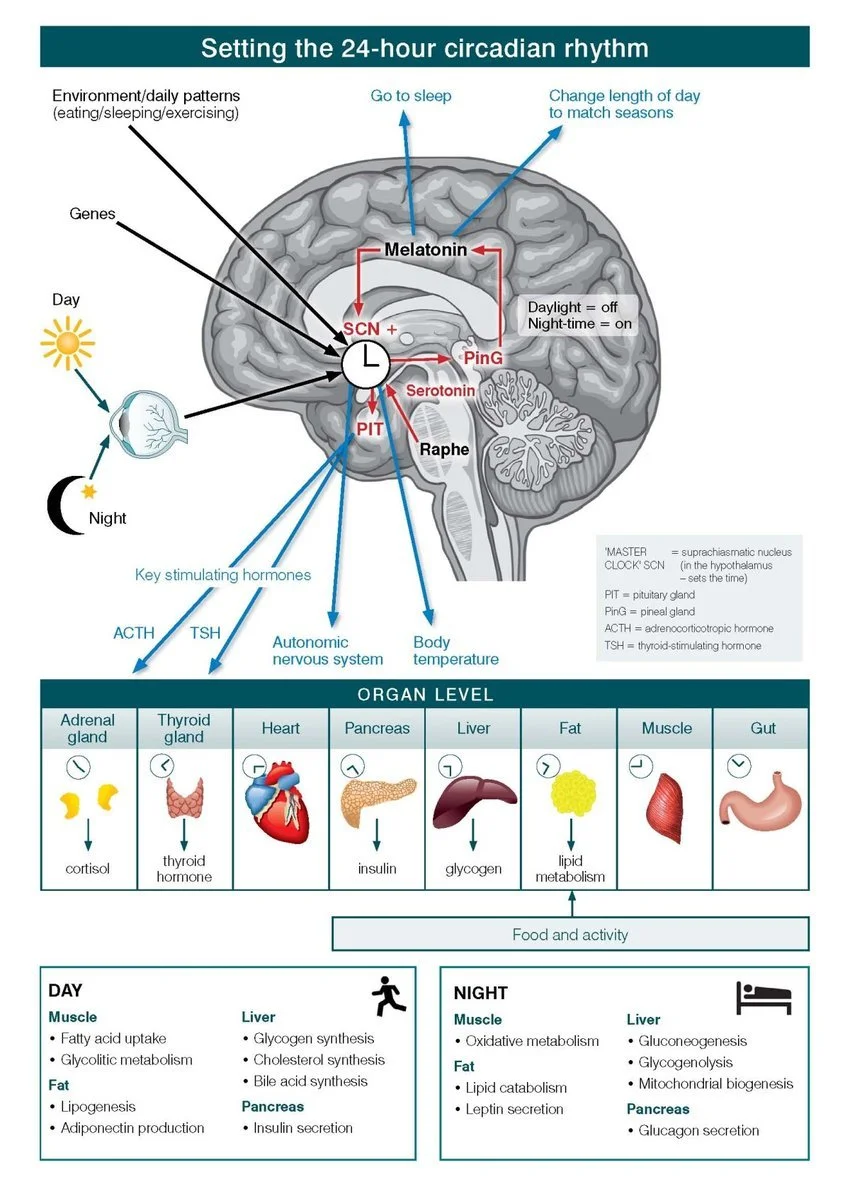
More than just sleep - all our cells, tissues and organs prioritise functions by the time of day.
Light as Your Body's Master Clock: How Morning Sunlight Sets Your Entire Day
Your body doesn't just respond to light—it requires it to function optimally. Deep within your brain sits a tiny region called the suprachiasmatic nucleus (SCN), your master circadian clock. This biological timekeeper coordinates the rhythm of every cell, tissue, and organ in your body, but it needs daily recalibration. The reset button? Sunlight hitting your eyes within the first hour of waking.
When morning light enters your eyes, specialised cells called intrinsically photosensitive retinal ganglion cells (ipRGCs) detect the light through a photopigment called melanopsin. This isn't about seeing—it's about biological signalling. These cells send direct messages to your SCN, essentially saying "day has begun." This signal triggers a cascade of events: melatonin production stops, cortisol rises appropriately, body temperature begins to increase, and digestive enzymes prepare for incoming food.
The magic happens specifically at sunrise, when the sun sits between 0-10 degrees above the horizon. At this angle, the light spectrum contains the perfect ratio of wavelengths—predominantly red and infrared with just enough blue to activate melanopsin without overwhelming it. This natural composition cannot be replicated by artificial light sources, no matter how "full spectrum" they claim to be.
Missing this morning signal creates a domino effect throughout your day. Your cortisol rhythm becomes dysregulated, potentially remaining elevated when it should decline or failing to rise adequately when needed. Your metabolic hormones lose their timing cues, affecting insulin sensitivity and blood sugar regulation. Your digestive system operates without clear instructions about when to be active. Even your immune system, which follows a strict circadian pattern, loses its coordination.
The practical application is beautifully simple: spend 3-10 minutes outside at sunrise, facing east, with naked eyes (no glasses, contacts are OK, but no sunglasses). If possible, have skin exposed and stand barefoot on earth, grass, or sand for additional benefits through grounding. On cloudy days, the light still penetrates—you need the exposure regardless of weather. This single practice sets the foundation for optimal function across all body systems for the following 24 hours.
For those waking before sunrise, using orange or amber blue-blocking glasses indoors protects your melatonin production (which happens later in the day), until natural light becomes available. The key is avoiding artificial blue light before your eyes have received the morning sun signal, as this creates conflicting messages that confuse your biological clock.
It’s not just the eyes which detect light, our skin contains melanopsin receptors and even deep into our body receives light signals in a variety of ways - as heat energy and as different frequencies/vibrations of light.
The Mitochondrial Connection: Why Every Cell Needs Light Signals
While we often think of mitochondria simply as cellular power plants, they're actually sophisticated light-sensing organelles. These tiny structures within your cells don't just respond to nutrients—they respond to light frequencies. This understanding revolutionises how we think about health at the cellular level.
Mitochondria contain specialised protein complexes (Complex I through V) that form the electron transport chain, where cellular energy (ATP) is produced. Critically, Complex IV contains a molecule called cytochrome C oxidase, which acts as a photoreceptor. This means your mitochondria are literally designed to receive and respond to specific light wavelengths, particularly in the red and near-infrared spectrum (600-1000nm) which penetrate into the body up to a depth of around 8 cm.
When appropriate light wavelengths reach your mitochondria, several beneficial processes occur. Red and near-infrared light stimulate cytochrome C oxidase, enhancing ATP production and improving cellular energy. These same wavelengths support the production of structured water (also called EZ water or exclusion zone water) at Complex IV. This isn't ordinary water—it's a gel-like form that enables efficient electron tunnelling between mitochondrial complexes and may facilitate communication throughout your body via oscillatory signals transmitted through your fascia.
Every cell in your body contains mitochondria (except red blood cells), which means every cell requires light signals for optimal function. Your skin cells, digestive tract cells, brain cells, immune cells, hormone-producing cells—all contain mitochondria that respond to light. This explains why light exposure affects every system simultaneously: you're not treating symptoms in isolated organs, you're supporting the fundamental energy-producing structures present in every cell.
Beyond the pineal gland's production of melatonin (which requires darkness), your mitochondria themselves produce melatonin locally when conditions are appropriate. This sub-cellular or extra-pineal melatonin functions as a powerful antioxidant directly where it's needed, protecting the electron transport chain from oxidative damage. The production of this mitochondrial melatonin depends on having received adequate light signals during the day—another reason why daytime light exposure directly influences nighttime cellular repair.
Mitochondria also sense non-native electromagnetic frequencies (WiFi, Bluetooth, cellular signals) as stressors. These frequencies can trigger production of inducible nitric oxide synthase (iNOS), creating danger signals within cells, disrupting the electron transport chain, and interfering with structured water production. This is why evening practices like turning off WiFi and putting devices out of the bedroom or on airplane mode aren't just about screen light—they're about reducing electromagnetic stress on your mitochondria during crucial repair hours.
The fascia throughout your body, rich in structured water, conducts electrical charge and may transmit the oscillatory signals generated by mitochondrial function. This creates a body-wide communication network that operates on frequencies and vibrations, with implications for why therapies like sound healing and vibrational medicine show effects. Your mitochondria aren't isolated units—they're part of an interconnected system communicating through light, frequency, and structured water.
Beyond Vitamin D: The Multiple Pathways Light Influences Health
While making our own vitamin D is important, focusing solely on this one pathway dramatically understates the profound effects of sun exposure. Understanding the multiple mechanisms by which light influences health helps explain why sun exposure cannot be replaced by vitamin D supplementation alone (see my previous post about Vitamin D production versus supplementation).
When UVB wavelengths contact your skin, they initiate vitamin D production in skin cells through conversion of 7-dehydrocholesterol to cholecalciferol. However, this same UVB exposure simultaneously triggers production of numerous important molecules, including cholesterol sulphate—a critically important molecule that supports cardiovascular health, cellular membrane integrity, and acts as a water-attracting molecule throughout your body. You cannot obtain cholesterol sulphate from oral supplements; it requires sun exposure on skin. And, this is only one of a myriad of other beneficial molecules (and some we simply haven’t researched yet) that are produced when sun meets skin.
UVB exposure on your abdomen specifically influences your gut microbiome composition, causing beneficial seasonal shifts in microbial populations. This explains part of why vitamin D supplementation cannot replicate the immune-supporting effects of actual sun exposure—the microbiome component is missing entirely from supplementation. Your gut bacteria respond to the light signal, not just the resulting vitamin D metabolite.
Light exposure also drives pregnenolone synthesis, the mother hormone from which all steroid hormones are made… including cortisol, DHEA, progesterone, testosterone, and estrogen. Current research hypothesises that UVB wavelengths, possibly along with blue and red/near infrared (NIR) wavelengths support pregnenolone production, through indirect mechanisms. This has profound implications for anyone experiencing hormonal imbalances, adrenal issues, or reproductive concerns.
Receiving light via the eyes triggers multiple pathways beyond the circadian clock setting. Light exposure influences mood through multiple neurotransmitter systems. The serotonin pathway (which ultimately produces melatonin at night) requires daytime light exposure to function optimally. Dopamine production, which affects motivation, pleasure, and focus, follows a circadian pattern influenced by light exposure. Seasonal affective disorder isn't just about winter darkness—it's about insufficient light signals reaching the brain through the eyes. So, when you just feel good getting some sun on your back this is part of what is happening in your body.
The skin itself functions as a neuroendocrine organ, containing receptors and producing hormones and neurotransmitters when exposed to light. This includes local production of beta-endorphins, which may explain the mood-lifting effects of sun exposure beyond vitamin D. Your skin cells respond to different wavelengths throughout the day—morning red and infrared light provides different signals than midday UVB, which differs from afternoon's shift back toward red-dominant light.
Infrared wavelengths, particularly in the mid to far-infrared range (760nm to 1 million nm), penetrate deeply into tissues and support structured water production, enhance blood flow, reduce inflammation, and support tissue repair. These wavelengths are abundant in morning and evening sunlight but largely absent from artificial lighting. This is one reason why sunrise and sunset exposure provide benefits that midday sun alone cannot replicate.
Your lymphatic system, which handles immune surveillance and waste removal, operates on a circadian rhythm, influenced by light-dark cycles. Part of the lymphatic system, the glymphatic system in your brain - essentially the brain's waste removal system - functions primarily during deep sleep. Its effectiveness, however, depends on proper melatonin production, which requires appropriate light exposure during the day and darkness at night.
The seasonal variation in sunlight, rather than being a problem to overcome, provides important biological signals. Many biological processes evolved to vary seasonally, including immune function, reproductive hormones, and metabolic rate.
Year-round artificial lighting that doesn't vary may actually disrupt health by providing conflicting seasonal signals.
The Dark Side Matters: Why Darkness is as Essential as Light
While much attention focuses on getting adequate light exposure, the absence of light—true darkness—is equally critical for health. Darkness isn't merely the absence of light; it's a powerful biological signal in its own right.
Melatonin, often called the "darkness hormone," is produced primarily at night by your pineal gland. However, calling it merely a sleep hormone dramatically understates its importance. Melatonin is one of the most powerful antioxidants in your body, crossing all cellular barriers including the blood-brain barrier. It's anti-inflammatory, supports immune function, influences reproductive hormones, affects glucose metabolism, supports cardiovascular health, and even has anti-cancer properties. None of these benefits occur optimally without adequate melatonin production, which requires darkness.
Your pineal gland begins producing melatonin when the SCN signals that day has ended—typically starting around sunset, with production peaking between 2-4am. However, even small amounts of light exposure during the night can suppress melatonin production. Research shows that exposure to just 1-2 lux of light (roughly equivalent to a nightlight or the glow from electronics) during sleep hours can suppress melatonin by up to 50%.
The wavelength of light matters tremendously. Blue light (450-480 nm), overly abundant in LED bulbs, electronic screens, and fluorescent lighting, is approximately 100 times more powerful at suppressing melatonin than other wavelengths. Additionally, it doesn’t change remaining static day and night - unlike sunlight. This is why blue light in the evening and night is particularly problematic—it sends a "daytime" signal to your brain when it should be receiving "nighttime" cues.
Your mitochondria also depend on nighttime darkness to produce local melatonin for cellular protection. When you're exposed to artificial light at night (ALAN), you're not just disrupting your pineal gland's melatonin production—you're affecting melatonin production in every cell of your body. This cellular-level melatonin protects your mitochondrial electron transport chain from oxidative damage during the energy-intensive repair processes that occur during sleep.
The absence of darkness has profound metabolic effects. Nighttime light exposure disrupts glucose metabolism and insulin sensitivity, contributing to metabolic syndrome and diabetes risk. Studies show that even moderate room lighting during sleep (enough to see across the room but not read) significantly impairs glucose metabolism the following day, independent of sleep quality or duration.
Darkness also triggers the glymphatic system's peak activity—your brain's waste clearance system that removes metabolic waste products and proteins that accumulate during waking hours. This system functions primarily during deep sleep stages, requiring adequate melatonin signalling. Compromised glymphatic function has been linked to neurodegenerative conditions like Alzheimers, dementia and Parkinson's Disease, highlighting why nighttime darkness isn't optional for long-term brain health.
Practical implementation of darkness is straightforward but often culturally challenging. Your bedroom should be completely dark—dark enough that you cannot see your hand in front of your face. This means blackout curtains, covering or removing electronic device lights, and potentially using an eye mask. After sunset, household lighting should shift to warm, dim sources: amber or red bulbs, salt lamps, or even candlelight. Blue-blocking glasses (orange or red-tinted) worn after sunset protect your melatonin production while still allowing you to function in modern environments.
Understanding that darkness is a biological requirement - not just an absence of light - reframes how we approach evening and nighttime environments. Just as you'd be concerned about nutritional deficiency, darkness deficiency is a real phenomenon with measurable health consequences across every system in your body.
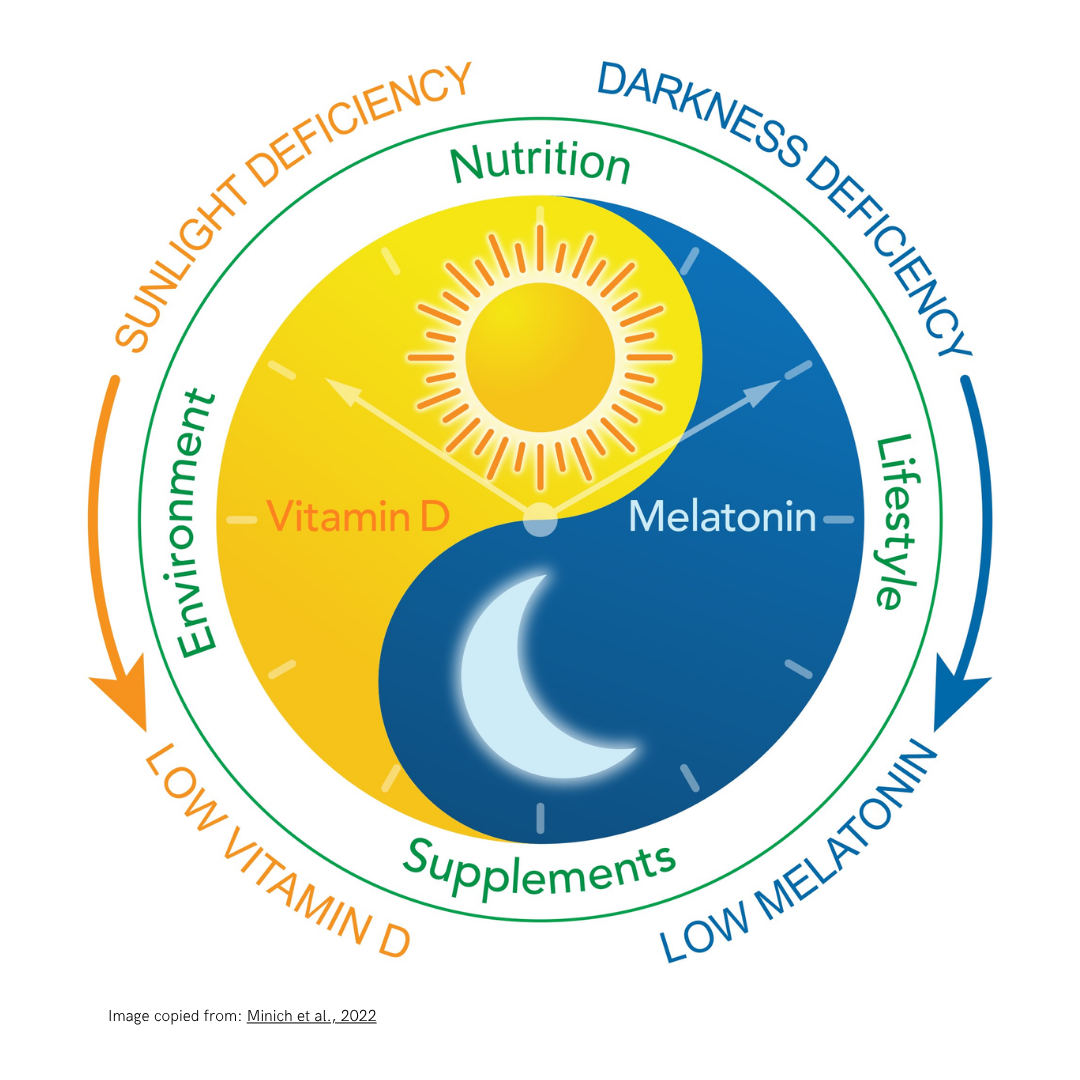
Light and dark
Light and darkness are both fundamental to regulation of ALL of circadian rhythms and to important hormones & signalling molecules such as Vitamin D production and both pineal and non-pineal melatonin.
Timing is Everything: When Light Exposure Counts Most
The concept of chronomedicine - timing medical interventions to align with biological rhythms—has profound implications for light exposure, and something currently receiving increased research attention. It's not just whether you get light, but when you receive different types of light that determines health outcomes.
Morning light exposure, specifically within the first hour of waking, sets your circadian phase for the entire day. This determines when hormones peak and trough, when digestive enzymes are most active, when cognitive performance is optimal, and when your body expects to sleep. Even 30 minutes of morning sunlight exposure significantly improves sleep quality that night, mood regulation throughout the day, and metabolic markers including insulin sensitivity.
The sunrise period (sun at 0-10 degrees above horizon) provides a unique spectrum: predominantly red and infrared with just enough blue to signal "day" to melanopsin receptors without overwhelming the system. This combination suppresses melatonin, triggers appropriate cortisol awakening response, and begins the cascade of daytime processes. Missing this sunrise signal—particularly if you're instead exposed to artificial blue light—creates a false start to your day with misaligned timing signals.
Midday sun exposure serves different purposes. This is when UVB wavelengths are strongest (in appropriate seasons and latitudes), making it optimal for vitamin D synthesis, cholesterol sulphate production, and building your solar callus - the skin's natural protective tanning response. However, the timing must be appropriate: 15-20 minutes for fair skin, potentially more for darker skin tones, starting with less time early in the season and gradually building tolerance - always avoiding burning or redness. Apps like D-Minder, My Circadian or Circadian Apps can calculate optimal exposure times based on your location, skin tone, and the season.
Afternoon light, as the sun descends and UVB diminishes while red and infrared increase, signals your body to begin transitioning toward evening. This is an ideal time for red light therapy devices (photobiomodulation) if you're using them, as they mimic the natural spectral shift that occurs as day progresses toward sunset. Continuing outdoor exposure during afternoon hours reinforces proper circadian signalling.
Sunset exposure bookends your day, providing another critical transition signal. The same red and infrared-dominant spectrum present at sunrise returns at sunset, signalling to your body that darkness approaches. This begins the physiological processes that lead to melatonin production. Cultures worldwide have sunset rituals, perhaps intuitively understanding this transition period's importance.
Post-sunset is when light becomes really problematic. Any blue or bright light exposure after sunset delays melatonin production and pushes your circadian phase later. This is why shift workers face such significant health challenges - they're working under bright, blue-enriched light precisely when their biology expects darkness. Even moderate indoor lighting after dark can suppress melatonin; this is why dimming lights dramatically and shifting to amber or red light sources becomes essential.
The timing of other health interventions should align with circadian principles. Exercise timing matters: morning or afternoon exercise entrains circadian rhythms and improves sleep, while late-night workouts can delay sleep onset by signalling to your body that it's still active daytime hours. Meal timing follows circadian patterns: eating breakfast within 90 minutes of waking supports metabolic health, while eating dinner 3+ hours before bed allows proper digestion and doesn't interfere with overnight fasting and cellular repair processes.
Supplement timing becomes strategic when considering circadian effects. Supplemental Vitamin D, which your body also recognises as a light signal, should be taken in the morning—taking it in evening sends conflicting signals. Similarly, energising supplements like B vitamins, CoQ10, and adaptogenic herbs like rhodiola should be morning or afternoon doses. Conversely, sleep-supporting nutrients like magnesium, glycine, and omega-3 fatty acids are most effective in evening doses when they work with your body's natural preparation for sleep.
Understanding timing transforms health interventions from random protocols to strategic support of your body's natural rhythms. The same intervention at different times can have different, even opposite effects—this is the power of chronomedicine.
Building Your Solar Callus: Safe Sun Exposure and Skin Adaptation
One of the greatest tragedies of modern health messaging is the blanket advice to avoid sun exposure due to skin cancer fears. This oversimplification ignores both the biological requirement for sun exposure and the body's sophisticated adaptation mechanisms. Not to mention the use of sunscreens containing unnecessary/sometimes harmful chemicals. Understanding how to safely build sun tolerance, or your "solar callus", is essential for reclaiming health benefits while minimising risks.
The golden rule is 'DON'T GET BURNED',
once you see your skin pinkening,
or feel it tingling, then it's time to cover up or go inside.
Your skin is designed to adapt to sun exposure through a process called tanning, which isn't merely cosmetic - it's actually protective. When UV exposure occurs, melanocytes in your skin produce melanin, which acts as a natural sunscreen by absorbing UV radiation. Additionally, your skin thickens slightly in response to regular sun exposure, providing another layer of protection. This combined adaptation, pigmentation plus thickening, constitutes your solar callus.
The critical factor is gradual adaptation without burning.
Red, inflamed, or blistering skin indicates damage, not healthy adaptation. The goal is to build tolerance slowly, starting in early spring when UV intensity is lower, and gradually increasing exposure time as summer approaches and your skin's protective mechanisms strengthen.
Starting your solar callus requires patience and attention. Begin with 10-15 minutes of morning sun on skin, when UV is present but not intense. Increase exposure time by just a few minutes every few days, monitoring your skin's response. This is especially important in Australia. Healthy tanning develops slowly over weeks and months. The golden-tan appearance that develops from regular, non-burning exposure is protective; the red or grey-tinged appearance that results from irregular, excessive exposure or incongruent light exposure (such as getting only midday UV without morning/evening red light) indicates unhealthy adaptation. Wearing sunglasses can cause an incongruent signal between the eyes and the skin, interfering with the natural protective mechanisms.
Timing your sun exposure matters tremendously for building your solar callus. Morning and late afternoon sun, rich in red and near-infrared wavelengths, prepare your skin for midday UV exposure. These longer wavelengths provide cellular protection, support mitochondrial function in skin cells, and may help repair DNA damage that occasionally occurs from UV exposure. Getting only midday sun without this bookending protection is like building a house starting with the roof -the foundation is missing.
Interestingly, historical evidence strongly supports regular sun exposure as health-promoting rather than harmful. Until the 1920s, sunlight was firmly established as beneficial therapy, successfully treating tuberculosis, skin conditions, and mental health issues. Nobel Prizes were awarded for concentrated light therapy. The shift to avoiding sun came partly from flawed research: to "prove" sun exposure caused skin cancer, researchers used arc lamps (welding lamps) rather than natural sunlight, completely different spectral composition and intensity.

Heliotherapy was a recognised, successful treatment in hospitals during the 1920’s - 1930’s
Your eyes and skin must receive congruent signals for proper adaptation. Wearing sunglasses while exposing skin to sun creates conflicting messages, your eyes signal that it's darker than it actually is, preventing proper melanin production in skin. Similarly, sunscreen blocks the very signals your skin needs to adapt. This doesn't mean avoiding all sun protection; rather, it means building your base tolerance first, then using protection strategically for extended exposure beyond your adapted limits.
The concept of "healthy sun exposure" isn't reckless - it's strategic. You're working with your body's natural protective mechanisms rather than against them. This approach requires:
Starting gradually in spring
Timing exposure appropriately (morning and midday)
Never burning
Building tolerance slowly
Maintaining regular exposure (inconsistent exposure prevents adaptation)
Exposing skin without sunglasses to ensure congruent signalling
Recognising that healthy tanning is protective
For those with pale skin, compromised skin from years of sun avoidance or inconsistent exposure, rebuilding your solar callus may take a full season or more. This is where red light therapy devices can provide supportive therapy, as red and near-infrared wavelengths support skin cell mitochondrial function and may help prepare skin for UV exposure.
The fear of sun exposure, while well-intentioned, has created a population deficient in not just vitamin D but all the multiple benefits of sun exposure previously discussed. Safe sun exposure isn't about choosing between health and skin protection - proper solar callus development provides both.
Conclusion
Strategic light and dark exposure is fundamental to all health, what we naturopaths call a ‘Pillar of Health’ - as important (or perhaps moreso) as a healthy diet, exercise, hydration and sleep. This means that in order to optimise health, sunlight exposure is essential and for multiple reasons that extend far beyond regulating the sleep-wake cycle. It’s time to recognise we are solar-powered animals, who evolved to be outside. We need to get back out there to start to regain our health.
If you’d like to know more, Karinda John and myself (aka The Nuanced Naturopaths) are putting together some exciting offerings - courses, masterclasses and presentations.
Send me a message via the button below if you’d like to be one of the first to know.
Frequently Asked Questions:
-
While vitamin D supplementation can address some aspects of deficiency, it cannot replicate the full benefits of sun exposure including a myriad of other beneficial molecules, like lumisterol, tachysterol, cholesterol sulphate production, gut microbiome signalling, pregnenolone synthesis, and circadian entrainment (for a start!). When our bodies produce their own vitamin D, it involves also producing a cascade of other molecules which all have a purpose. Supplementation only provides one molecule in the form of D3. If supplementation is necessary, testing is essential to determine appropriate dosing, as needs vary dramatically between individuals based on genetics, body composition, current levels, and absorption. Importantly, take vitamin D in morning or early afternoon as it acts as a light signal to your body; evening doses can disrupt sleep. Vitamin D requires magnesium for activation, so ensure adequate magnesium intake. While supplementing, continue seeking sun exposure whenever possible, as supplementation is a substitute, not a replacement.
-
Blue blocking glasses are effective when used strategically and when the correct lens colour is chosen for the time of day. Orange or amber lenses block approximately 90% of blue light and are appropriate for evening wear (after sunset) to protect melatonin production while still allowing function in modern environments. Red lenses block nearly 100% of blue and green light and are ideal for pre-sunrise hours if you wake before dawn, or for use in brightly-lit evening environments. Yellow lenses, often marketed as "blue blockers," only filter about 30-40% of blue light and are appropriate for daytime indoor use to reduce eye strain from screens but won't protect nighttime melatonin production. The glasses work by preventing the specific wavelengths (450-480nm) that suppress melatonin from reaching your eyes. However, they're a harm-reduction strategy, not a solution, dimming lights and reducing screen exposure remains ideal.
-
No artificial light source can replace natural sunlight for circadian entrainment and whole-body health. While red light therapy devices provide beneficial effects for mitochondrial support, wound healing, and inflammation reduction, and collagen production they emit only specific frequencies within a narrow band. Sunlight provides the complete spectrum of visible and invisible wavelengths in dynamically changing ratios throughout the day—something no device replicates. Full-spectrum lamps, while better than standard bulbs, still lack the intensity, complete spectrum (especially UV), and dynamic changes of natural light. Your circadian system requires the actual sun's signals to properly entrain. Red light devices are useful as supplementary therapy—particularly during winter, for shift workers, or for targeted healing—but always prioritise natural sunlight when possible. Even on cloudy days, outdoor light is significantly more intense and biologically appropriate than any indoor lighting.
-
Yes, and the mechanism is well-established. Morning light exposure, particularly within the first hour of waking, sets your circadian phase by suppressing melatonin, triggering cortisol awakening response, and starting the countdown to melatonin production approximately 14-16 hours later. Studies consistently show that people who get adequate morning bright light fall asleep faster, sleep more deeply, and wake feeling more refreshed. Morning light improves sleep quality through multiple pathways: proper cortisol timing (high in morning, low at night), correctly timed melatonin production (low during day, high at night), enhanced deep sleep stages, and stabilisation of sleep-wake timing. The effect is dose-dependent—more morning light correlates with better sleep, up to a point. Even 10-20 minutes of outdoor morning light shows measurable effects, though 30-60 minutes provides optimal benefits. The key is consistency; your circadian system responds best to regular, predictable timing. For those with insomnia or irregular sleep, morning light exposure is often more effective than sleep aids because it addresses the root timing issue rather than forcing sleep.
Of course, it’s not the only thing that affects sleep, so if you have sunlight exposure nailed and you’re still experiencing sleep disturbance - come and talk to me and we can work out a strategy to get you sleeping well again! -
Some of the references - contact me for the full list.
Begemann, K., Rawashdeh, O., Olejniczak, I., Pilorz, V., De Assis, L. V. M., Osorio-Mendoza, J., & Oster, H. (2025). Endocrine regulation of circadian rhythms. npj Biological Timing and Sleep, 2(1). https://doi.org/10.1038/s44323-025-00024-6
Candolin, U., & Filippini, T. (2025). Light pollution and its impact on human health and wildlife. BMC Environmental Science, 2(1). https://doi.org/10.1186/s44329-025-00017-7
Castrucci, A. M. d. L., Baptista, M. S., & de Assis, L. V. M. (2023). Opsins as main regulators of skin biology. Journal of Photochemistry and Photobiology, 15, 100186. https://doi.org/https://doi.org/10.1016/j.jpap.2023.100186
Chamkouri, H., Liu, Q., Zhang, Y., Chen, C., & Chen, L. (2024). Brain photobiomodulation therapy on neurological and psychological diseases. Journal of Biophotonics, 17(1), e202300145. https://doi.org/https://doi.org/10.1002/jbio.202300145
Fusco, F., Longo, N., De Sio, M., Arcaniolo, D., Celentano, G., Capece, M., La Rocca, R., Mangiapia, F., Califano, G., & Morra, S. (2021). Impact of circadian desynchrony on spermatogenesis: a mini review. Frontiers in Endocrinology, 12, 800693.
Hamblin, M. R. (2018a). Mechanisms and Mitochondrial Redox Signaling in Photobiomodulation. Photochemistry and Photobiology, 94(2), 199-212. https://doi.org/10.1111/php.12864
Hamblin, M. R. (2018b). Photobiomodulation for traumatic brain injury and stroke. Journal of Neuroscience Research, 96(4), 731-743. https://doi.org/10.1002/jnr.24190
Ikegami, K., Refetoff, S., Van Cauter, E., & Yoshimura, T. (2019). Interconnection between circadian clocks and thyroid function. Nature Reviews Endocrinology, 15(10), 590-600.
Liu, P. Y. (2024). Light pollution: time to consider testicular effects. Frontiers in Toxicology, 6. https://doi.org/10.3389/ftox.2024.1481385
Lucio-Enríquez, K. R., Rubio-Valles, M., Ramos-Jiménez, A., & Pérez-León, J. A. (2025). Human melanopsin (OPN4) gene polymorphisms: a systematic review. Frontiers in Neuroscience, 19. https://doi.org/10.3389/fnins.2025.1581266
Lv, S., Huang, Y., Ma, Y., & Teng, J. (2024). Antidepressant mechanism of traditional Chinese medicine: Involving regulation of circadian clock genes. Medicine, 103(5). https://journals.lww.com/md-journal/fulltext/2024/02020/antidepressant_mechanism_of_traditional_chinese.59.aspx
Meng, X., Li, Y., Li, S., Zhou, Y., Gan, R.-Y., Xu, D.-P., & Li, H.-B. (2017). Dietary Sources and Bioactivities of Melatonin. Nutrients, 9(4), 367. https://doi.org/10.3390/nu9040367
Moon, D. (2025). Genetic Life Hacks. https://www.geneticlifehacks.com/melanopsin-light-response-circadian-rhythm-and-blue-light-exposure/
Palumaa, T., Gilhooley, M. J., Jagannath, A., Hankins, M. W., Hughes, S., & Peirson, S. N. (2018). Melanopsin: photoreceptors, physiology and potential. Current Opinion in Physiology, 5, 68-74. https://doi.org/https://doi.org/10.1016/j.cophys.2018.08.001
Pandeshwar, P., Roa, M. D., Das, R., Shastry, S. P., Kaul, R., & Srinivasreddy, M. B. (2016). Photobiomodulation in oral medicine: a review. Journal of Investigative and Clinical Dentistry, 7(2), 114-126. https://doi.org/10.1111/jicd.12148
Preto, S., & Caramelo Gomes, C. (2019). Lighting in the Workplace: Recommended Illuminance (lux) at Workplace Environs. In (pp. 180-191). https://doi.org/10.1007/978-3-319-94622-1_18
Rao, F., & Xue, T. (2024). Circadian-independent light regulation of mammalian metabolism. Nature Metabolism, 6(6), 1000-1007. https://doi.org/https://doi.org/10.1038/s42255-024-01051-6
Sundström-Poromaa, I., Comasco, E., Sumner, R., & Luders, E. (2020). Progesterone – Friend or foe? Frontiers in Neuroendocrinology, 59, 100856. https://doi.org/https://doi.org/10.1016/j.yfrne.2020.100856
Suomalainen, A., & Battersby, B. J. (2018). Mitochondrial diseases: the contribution of organelle stress responses to pathology. Nature reviews., 19(2), 77-92. https://doi.org/10.1038/nrm.2017.66
Wen, H., Deng, H., Li, B., Chen, J., Zhu, J., Zhang, X., Yoshida, S., & Zhou, Y. (2025). Mitochondrial diseases: from molecular mechanisms to therapeutic advances. Signal Transduction and Targeted Therapy, 10(1), 9. https://doi.org/10.1038/s41392-024-02044-3
Witzig, M., Grimm, A., Schmitt, K., Lejri, I., Frank, S., Brown, S., & Eckert, A. (2020). Clock-Controlled Mitochondrial Dynamics Correlates with Cyclic Pregnenolone Synthesis. Cells, 9. https://doi.org/10.3390/cells9102323
Wunsch, A.). https://vimeopro.com/alexanderwunsch/alexander-wunsch-in-english/page/1
You, J., Bragin, A., Liu, H., & Li, L. (2021). Preclinical studies of transcranial photobiomodulation in the neurological diseases. Translational Biophotonics, 3(2). https://doi.org/10.1002/tbio.202000024
Zhu, Z., Mallik, S., Stevens, T. A., Huang, R., Levy, E. D., & Shan, S.-O. (2025). Principles of cotranslational mitochondrial protein import. Cell, 188(20), 5605-5617.e5614. https://doi.org/10.1016/j.cell.2025.07.021
Zong, Y., Li, H., Liao, P., Chen, L., Pan, Y., Zheng, Y., Zhang, C., Liu, D., Zheng, M., & Gao, J. (2024). Mitochondrial dysfunction: mechanisms and advances in therapy. Signal Transduction and Targeted Therapy, 9(1). https://doi.org/10.1038/s41392-024-01839-8